Refrigerator Repair: When to Call a Professional (And When You Can Wait)
 Kitchen
Your refrigerator is the one appliance in your home that never gets a day off. It runs 24 hours a day, every day of the year, quietly keeping your food safe and your groceries fresh. So when it starts acting up, it's easy to panic — but not every symptom means disaster is imminent, and knowing the difference can save you time, money, and a fridge full of spoiled food.
The most common complaint we hear is a refrigerator that isn't cooling properly. This can stem from a dozen different causes: a failing compressor, a refrigerant leak in the sealed system, a blocked condenser coil caked in dust, a faulty evaporator fan, or simply a door seal that no longer closes tight. A DIY approach — vacuuming the coils, checking the door gasket for gaps — can sometimes resolve minor cooling issues. But if the unit is warm throughout, making unusual noises, or cycling on and off constantly, that's a sign of an underlying electrical or sealed-system problem that requires a trained technician with proper diagnostic equipment.
Leaking water underneath or inside the unit is another frequent issue, often traced to a clogged defrost drain or a cracked water line feeding an ice maker. Left unaddressed, this can damage flooring and encourage mold growth, so it's worth having it looked at sooner rather than later. Similarly, an ice maker that has stopped producing ice, or a unit making a persistent grinding or buzzing sound, usually points to a specific failed component rather than a total system failure — an experienced technician can typically diagnose these quickly, though repair timing depends on the diagnosis and required-part availability.
At Aerotech Solution, our trained, experienced technicians arrive equipped to handle everything from compressor diagnostics to sealed-system leak repair, carrying common replacement parts and sourcing model-specific parts after diagnosis. We understand that a broken refrigerator isn't just inconvenient, it's a risk to the food your family depends on. Same-day appointments may be available for cooling failures based on technician availability, service location and the time the request is received. Every repair comes backed by our workmanship warranty, so you're covered if anything doesn't perform as expected.
If your refrigerator is showing any of these warning signs — inconsistent temperatures, water pooling, strange noises, or a broken ice maker — don't wait for a full breakdown. Reach out to our team and we'll get a trained technician to your door quickly, with the parts and expertise to fix it right the first time.
Common Causes
Most refrigerator failures trace back to one of a handful of components. Knowing what's actually behind the symptom helps set realistic expectations before a technician even arrives.
Refrigerant leaks in the sealed system
A slow leak in the sealed refrigeration system gradually reduces cooling capacity, often before it's noticeable at the thermostat. This requires specialized leak detection and sealed-system repair, not a simple part swap.
Dirty or blocked condenser coils
Dust, pet hair, and debris on the condenser coils force the compressor to work harder and can cause the unit to run constantly without reaching target temperature.
Failing evaporator fan motor
This fan circulates cold air through the freezer and fridge compartments. When it fails or gets obstructed by ice, cooling becomes uneven or stops in one compartment.
Worn door gaskets
A gasket that no longer seals lets warm, humid air infiltrate the cabinet, forcing the compressor to run longer cycles and contributing to frost buildup.
Electrical and control board failures
Modern refrigerators rely on circuit boards to manage defrost cycles, temperature sensors, and compressor timing. A single failed board can produce symptoms that look mechanical but aren't.
Signs You Need Professional Repair
Some symptoms are safe to monitor for a day or two; others should prompt you to contact a qualified technician promptly.
The compressor runs constantly and never cycles off
This usually means the system is struggling to reach temperature, often due to a leak or blocked airflow.
Food spoils noticeably faster than normal
A sign that internal temperatures are running warmer than the display suggests.
Frost is building up inside the freezer walls
Points to a defrost system failure allowing warm, humid air to enter repeatedly.
You hear clicking, buzzing, or grinding sounds
New or louder-than-usual noises typically indicate strain on the compressor, fan, or start relay.
Energy bills have crept up without an obvious cause
A refrigerator working harder than it should to maintain temperature draws more power, often before a full failure occurs.
Common Problems
Refrigerator not cooling at all is the most frequent complaint we see, and it can stem from a failed compressor, a refrigerant leak, or something as simple as a thermostat set incorrectly after a power outage.
Freezer cold but refrigerator warm is a distinct and common scenario: it usually points to a blocked or failed evaporator fan, or an air damper that's stuck closed, preventing cold air from reaching the fresh food compartment even though the freezer itself is working fine.
Water pooling inside the unit or on the kitchen floor typically comes from a clogged or frozen defrost drain, or a cracked water line feeding an ice maker or dispenser.
Ice maker problems — no ice production, small or hollow cubes, or leaking around the dispenser — are usually isolated to the water inlet valve, the ice maker assembly itself, or a frozen supply line, and rarely require touching the main refrigeration system.
How Professionals Diagnose the Problem
A proper diagnosis starts before any panel comes off. Our technicians ask what changed recently — a power outage, a recent move, a full grocery haul — since that context often narrows down the cause quickly.
From there, diagnosis follows the airflow and the electrical path: checking that the evaporator and condenser fans spin freely, confirming the compressor is receiving correct voltage, and using temperature probes to compare actual compartment temperatures against what the control board believes it's maintaining.
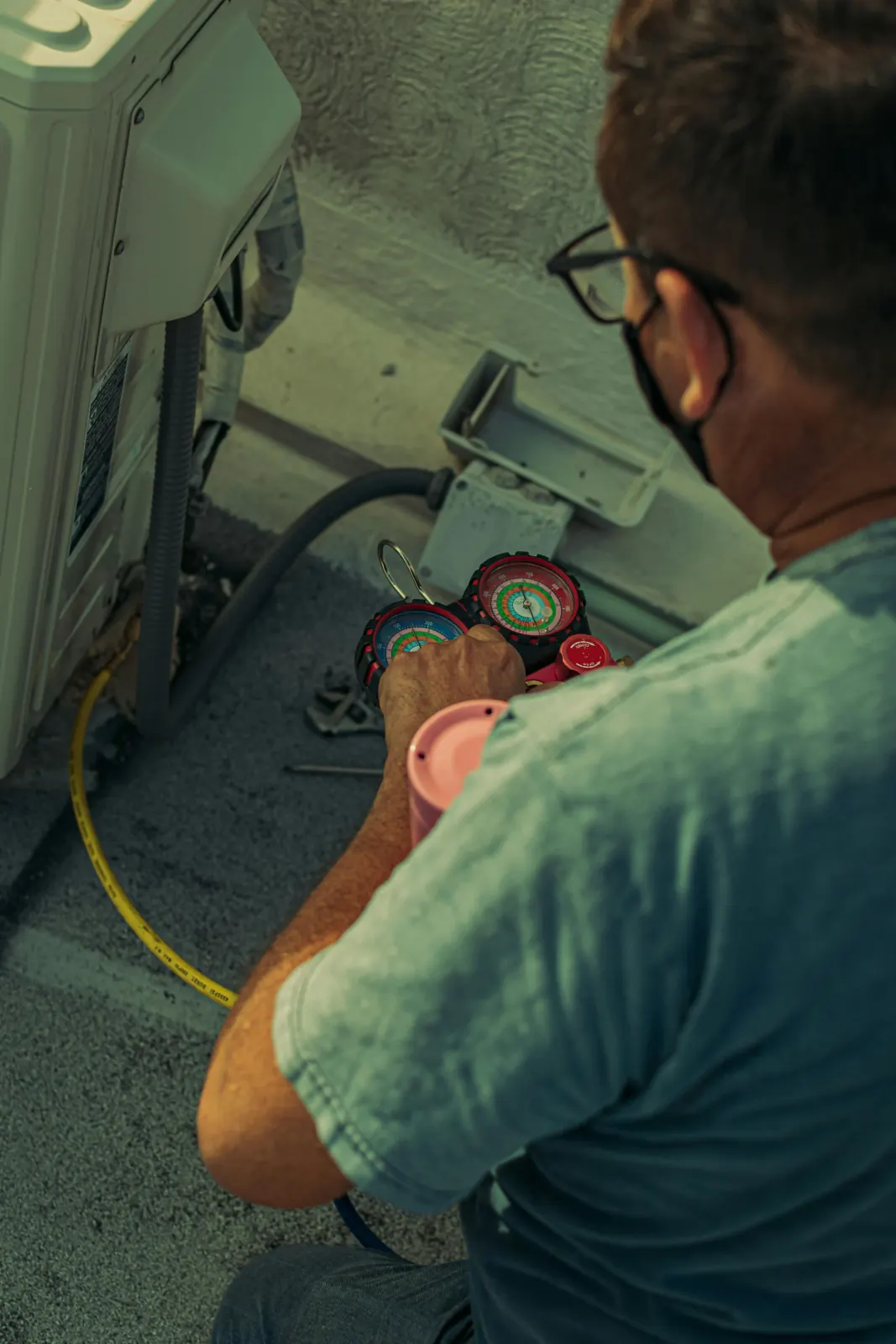
If those checks don't explain the symptom, we move to sealed-system diagnostics — testing refrigerant pressure and checking for leak points using electronic leak detectors. Refrigerant work is handled in accordance with applicable EPA requirements, and this is one area of a refrigerator that can't be safely assessed by ear or eye alone.
Repair Process
Once the cause is confirmed, we walk through exactly what needs to happen and what it will cost before any work begins — no repair starts on a guess.
Electrical, fan, and door seal repairs use common replacement parts carried on the service vehicle. Sealed-system repairs, which are less common, may require additional time to source a specific compressor, a model-specific part, or complete a proper refrigerant recovery and recharge.
Every repair ends with a running test period on-site, confirming the unit is actually reaching and holding temperature before we consider the job done — not just that it powers on.
Repair vs Replacement
Refrigerators typically last 12–15 years, and the repair-or-replace decision usually comes down to the age of the unit and which component has failed.
Under 8 years old
Repair is almost always the right call for any single-component failure, including fan motors, control boards, and door seals.
8–12 years old
Still generally worth repairing unless the compressor itself has failed, in which case it's worth comparing repair cost to a new unit's price.
Over 12 years with a compressor failure
This is where replacement often makes more financial sense, especially factoring in the efficiency gains of a newer model.
Repeated repairs within a year
If the same unit has needed multiple service calls recently, that pattern alone is worth factoring into the decision regardless of age.
Preventive Maintenance Tips
Vacuum the condenser coils twice a year
This single habit prevents a large share of the cooling complaints we respond to.
Test the door seal periodically
Close the door on a dollar bill — if it slides out easily, the gasket may need replacing.
Keep the unit reasonably full but not packed
An overstocked fridge blocks internal airflow; an empty one loses thermal mass and cycles more often.
Clear the interior drain hole occasionally
Prevents water pooling and ice buildup in the back of the fridge compartment.
Give the unit clearance from the wall
Condenser coils need airflow behind and around the unit to dissipate heat efficiently.
Safety Tips
Never attempt sealed-system repairs yourself
Refrigerant work is handled in accordance with applicable EPA requirements, and improperly handled refrigerant is both a safety and environmental hazard.
Unplug the unit before checking anything behind or beneath it
Refrigerators combine water lines, electrical components, and moving fan blades in close proximity.
Discard food after extended power loss or cooling failure
If the fridge has been above 40°F for more than two hours, perishable food safety is a real concern, not just a taste issue.
Address water pooling near outlets promptly
Water near electrical outlets or the compressor compartment is a shock hazard that shouldn't wait.
Cost Factors
Refrigerator repair cost depends primarily on which component has failed, not the brand alone. Fan motors, door seals, and water inlet valves are on the more affordable end of the spectrum. Control board replacement and sealed-system repairs — involving refrigerant recovery, leak repair, and recharge — cost more due to the specialized labor and parts involved.
Built-in and counter-depth models can also carry higher parts costs than standard freestanding units, simply due to more compact, specialized components.
We provide a fixed, written quote after diagnosis and before any repair begins, so you know the exact cost upfront rather than an estimate that changes mid-job.
Why Choose Aerotech Solution Inc.
We treat refrigerator repair as a food-safety issue first, and same-day appointments may be available for cooling failures based on technician availability, service location and the time the request is received.
Our technicians are trained and experienced across major brands, carry common replacement parts, and source model-specific parts after diagnosis. Every completed repair is backed by a workmanship warranty, and every appointment follows the same diagnostic-first approach: confirm the actual cause, explain the repair options, and test the unit before considering the job done.
When to Call a Professional
Cleaning coils, checking the gasket, and clearing the drain hole are reasonable for a homeowner to handle. Anything involving the sealed refrigeration system, electrical diagnostics, or a unit that isn't cooling within a few hours of basic troubleshooting is where a professional visit protects both your food and your appliance from further damage.
Frequently Asked Questions
Why is my refrigerator not cooling?
The most common causes are a blocked condenser coil, a failing evaporator fan, a refrigerant leak, or a compressor nearing failure. A technician can narrow this down with airflow and electrical testing before touching the sealed system.
Why is my refrigerator leaking water?
This is usually a clogged or frozen defrost drain, or a cracked water line feeding an ice maker or dispenser. Both are common, serviceable repairs that don't require replacing the unit.
Why is my freezer cold but refrigerator warm?
This points to a blocked or failed evaporator fan, or a stuck air damper preventing cold air from reaching the fresh food compartment, even though the freezer section is functioning normally.
Why is my refrigerator making loud noises?
Clicking often means a start relay struggling to kick-start the compressor. Buzzing or rattling frequently points to a fan blade obstructed by ice or a loose interior panel.
How much does refrigerator repair cost?
Cost depends entirely on which component has failed — fan motors and door seals are relatively affordable, while sealed-system or compressor repairs cost more due to specialized labor. We provide a fixed quote after diagnosis.
Is it worth repairing an old refrigerator?
For most component failures under about 10–12 years of age, yes. Compressor failure on a unit older than that is where comparing repair cost against a new model makes more sense.
How long does refrigerator repair take?
Repair timing depends on the diagnosis and required-part availability. Electrical, fan, and seal repairs often use parts commonly stocked on our service vehicles, while sealed-system repairs occasionally take longer if a specific part needs to be sourced.
What brands do you repair?
We service all major refrigerator brands, including Whirlpool, Samsung, LG, GE, KitchenAid, Frigidaire, and Liebherr, among others.
Can a refrigerator compressor be repaired?
In most cases a failed compressor is replaced rather than repaired, since it's a sealed unit. This is one of the more involved refrigerator repairs and is a key factor in the repair-versus-replace decision on older units.
How long do refrigerators last?
Most refrigerators last 12–15 years with reasonable maintenance, though this varies by brand, usage, and how consistently the condenser coils are kept clean.
Why won't my refrigerator turn on at all?
Before assuming a major failure, we check the outlet, power cord, and any tripped internal breaker or failed start relay — these are more common causes than a fully dead unit.
Why is my ice maker not working?
This is usually isolated to a faulty water inlet valve, a frozen supply line, or a jammed ejector arm, and typically doesn't affect the refrigerator's main cooling system.
Do you offer same-day refrigerator repair?
Cooling failures are treated as a priority given the food-safety risk. Same-day appointments may be available based on technician availability, service location and the time the request is received. Support hours are Monday–Saturday, 9:00 AM–5:00 PM Central Time.
Is refrigerator repair covered under warranty?
Repairs completed by Aerotech Solution include a workmanship warranty on both the parts installed and the labor performed. If your unit is still under manufacturer warranty, let us know and we can discuss how that applies.
Related Reading
If your dishwasher is acting up around the same time, our guide on cloudy dishes and standing water problems walks through the most common causes.
If this sounds like what you're dealing with, our trained, experienced technicians offer professional refrigerator repair service with same-day appointments available based on technician availability, service location and the time the request is received, backed by a workmanship warranty.